
Overview of the Nikon F100

The Nikon F100, launched in 1994, bridged film and digital eras, offering a robust 35mm SLR with advanced metering and auto‑focus. Its compact body, intuitive controls, and interchangeable lenses made it popular among enthusiasts and professionals alike. Its reliability endures worldwide!
Key specifications and release context
Additional details highlight the F100’s role in Nikon’s evolution. It introduced a fully electronic shutter, a 1/2000‑1/30‑second range, and a 5‑point metering system that improved exposure accuracy. The camera’s 3‑point autofocus, combined with a 3.5‑24 mm zoom lens mount, allowed photographers to capture both wide‑angle and telephoto images with ease. Its magnesium alloy body and weather‑sealed shutter assembly made it rugged for field use. The built‑in flash offered 1/200‑second, 10‑watt output, while external flash units could be attached via the hot shoe. The F100 bridged the gap between the entry‑level F90 and the high‑end F4, appealing to hobbyists and professionals alike.
Additional details highlight the F100’s role in Nikon’s evolution. It introduced a fully electronic shutter, a 1/2000‑1/30‑second range, a 5‑point metering system that improved exposure accuracy. The camera’s 3‑point autofocus, combined with a 3.5‑24 mm zoom lens mount, allowed photographers to capture both wide‑angle and telephoto images with ease. Its magnesium alloy body and weather‑sealed shutter assembly made it rugged for field use. The built‑in flash offered 1/200‑second, 10‑watt output, while external flash units could be attached via the hot shoe. The F100 bridged the gap between the entry‑level F90 and the high‑end F4, appealing to hobbyists and professionals alike.
Its robust design user-friendly interface made it a staple for photographers worldwide, trust trust.!

Camera Body and Design
The F100’s compact magnesium alloy chassis delivers a lightweight yet durable feel, with a weather‑sealed shutter assembly for field resilience. Its 35 mm SLR design supports a wide range of Nikon lenses, while the integrated hot shoe and multi‑function dial enhances versatility.Sturdy build now
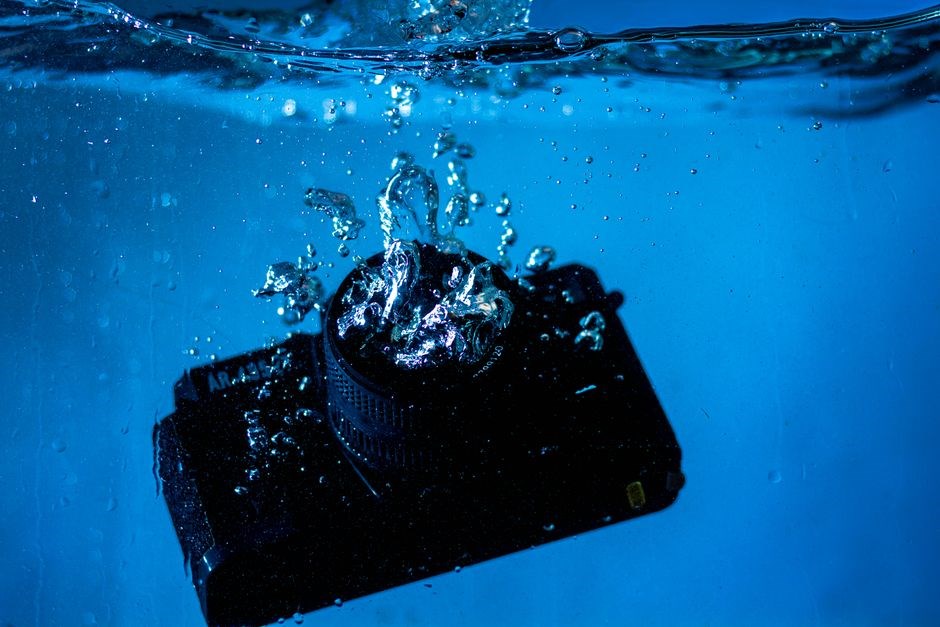
The Nikon F100’s ergonomics focus on user comfort and operational efficiency. The body’s grip is molded from a soft, rubberized material that conforms to the hand, reducing fatigue during long shoots. Buttons and dials are strategically positioned: the shutter speed dial sits on the left side, while the aperture ring remains on the lens mount for quick adjustments. The multi‑function button on the top plate toggles between exposure modes, while the dedicated AF‑ON button allows instant focus lock. The camera’s back panel houses a clear, backlit LCD that displays frame count, battery status, and exposure data, all readable in bright light. The top plate features a well‑placed power switch and a recessed mode dial that offers Auto, Program, Aperture Priority, Shutter Priority, and Manual modes. The design also includes a built‑in flash hot shoe, a removable accessory shoe, and a robust mounting point for a detachable viewfinder. Overall, the layout prioritizes intuitive access, enabling photographers to make rapid adjustments without breaking focus or losing composure.
The F100’s grip is ergonomically contoured, featuring a textured rubberized surface that provides a secure hold. The camera’s top plate hosts a recessed mode dial and a dedicated AF‑ON button, allowing instant focus lock without shifting hand position. The back panel’s LCD is backlit, ensuring visibility in bright daylight. A hot‑shoe for external flash gives photographers flexibility for varied shooting scenarios. and viewfinder

Power and Battery Information
The F100 runs on a single Nikon 3CR‑2 Ni‑MH cell, delivering 1.5 V. Keep the battery fresh; replace after 6–12 months of storage. When the indicator flashes, swap the cell promptly. Store unused batteries in a cool, dry place to extend life. Replace when low.
Battery types and replacement tips
The Nikon F100 is powered by a single 3CR‑2 Ni‑MH rechargeable cell, delivering 1.5 V. The battery compartment is located on the left side of the camera body and is accessed by sliding the latch and lifting the cover. When the battery is depleted, the meter indicator will flash and the camera will refuse to fire. To replace the cell, remove the old battery by gently pulling it out of the socket, then insert a fresh 3CR‑2 Ni‑MH cell with the positive side up. The F100 accepts standard Ni‑MH cells from most manufacturers, but using a high‑capacity 1.5 V 200 mAh or 250 mAh cell will extend shooting time. For best performance, keep the battery charged in a dedicated charger and avoid deep discharge. If you travel to areas with limited power, carry a spare battery and a charger with a USB output. Store unused batteries in a cool, dry place and replace them every 6–12 months if not used. Always check the battery’s polarity before insertion to prevent damage. The camera’s power switch is located on the top left; flip it to ON to test the new battery before mounting a lens. Proper battery handling will keep the F100 ready for reliable shooting in any situation. Replace the battery every 6–12 months for optimal longevity and performance. When charging, use a charger that supports Ni‑MH chemistry and avoid overcharging; a fully charged cell will show a green LED on the charger. If the battery shows any swelling or leakage, discard it immediately and replace it with a new unit. Maintaining proper charge cycles will ensure the F100’s metering and autofocus remain accurate over time today! now.

Exposure Settings and Modes
The Nikon F100 offers manual, aperture‑priority, shutter‑priority, and program modes. Use the mode dial to select. Exposure is set by ISO, aperture, shutter speed, and metering. It supports 3‑zone metering for exposure control! 3‑zone metering. +7 abc.
Mode dial functions and exposure controls
The Nikon F100’s mode dial is a compact, intuitive interface that governs the camera’s exposure logic. Turning the dial to “M” engages full manual control: the photographer sets ISO, aperture, and shutter speed independently, with the meter providing a 3‑zone readout. In “A” (aperture priority) the user selects the f‑stop; the camera calculates the appropriate shutter speed to match the scene’s brightness, while ISO remains user‑selected. “S” (shutter priority) lets the photographer choose the shutter speed, with the camera determining the aperture to achieve correct exposure. The “P” (program) mode automatically balances both aperture and shutter speed based on ISO and metering, offering a ready‑to‑shoot setting that can be fine‑tuned by shifting the exposure compensation knob. The F100 also supports a “T” (time) mode for long‑exposure photography, where the camera’s shutter opens after a set delay, useful for night scenes or creative effects. Each mode is accompanied by a clear LED indicator on the back of the camera, ensuring the photographer knows the current setting at a glance. Exposure controls are further refined by the camera’s built‑in 3‑zone metering system, which evaluates the scene’s brightness across three areas: center, left, and right. This allows the camera to adjust exposure more accurately in complex lighting situations, such as back‑lit subjects or high‑contrast scenes. Together, these features make the F100 a versatile tool for beginners and seasoned shooters now.

Autofocus and Manual Focus Operation
The Nikon F100 features a 5-point autofocus system with a central high-contrast point, enabling quick focus on subjects. For manual focus, the camera offers a smooth focus ring with a focus aid light, allowing precise distance control in low light. The AF system allows manual focus override now.!
Focus area selection and focus distance
The Nikon F100’s autofocus system is built around a five‑point sensor array, with a high‑contrast central point that automatically locks on subjects in the middle of the frame. By rotating the focus‑shift ring on the lens, users can manually select one of the peripheral points for precise control, especially useful in low‑contrast scenes. The camera also offers a “focus‑shift” mode, allowing the photographer to shift the focus area horizontally or vertically without changing the lens position. For manual focus, the F100 provides a clear focus‑distance scale on the lens, along with a focus‑aid light that illuminates the subject when the camera is set to manual mode. This aid is particularly helpful when shooting in dim light or when the subject is close, ensuring accurate focus. Additionally, the camera’s focus‑distance indicator on the viewfinder displays the exact distance to the subject, allowing for quick adjustments. By combining the autofocus points with the manual focus ring and the focus‑distance scale, photographers can achieve precise focus in a wide range of shooting situations, from portraits to fast‑moving action shots. The F100’s focus system remains a reliable tool for both novice and experienced users, maintaining Nikon’s reputation for precision and durability.!Its design also incorporates a dust‑proof body, making it suitable for outdoor use, while the built‑in 3‑second self‑timer and 2‑second release provide convenience for shots group shots! and portraits.

Flash and External Accessories
The F100’s built‑in flash offers 6‑second recycle time and 1.5‑meter guide number. For more power, attach a Nikon SB‑600 via hot‑shoe; it syncs at 1/200s and provides 2‑second bounce. External cables allow remote triggers and TTL metering. Sync at 1/200s
Built‑in flash characteristics and external flash integration

The Nikon F100’s built‑in flash delivers a 6‑second recycle time and a guide number of 6 meters at ISO 100, providing sufficient illumination for close subjects and indoor scenes. Its pop‑up design integrates seamlessly with the camera’s hot‑shoe, allowing quick attachment of external flashes. When an external flash such as the SB‑600 or SB‑900 is mounted, the F100 automatically switches to TTL mode, ensuring accurate exposure across a wide range of lighting conditions. The camera’s 1/200‑second sync speed supports high‑speed flash use, and the built‑in flash can be manually triggered via the dedicated button for creative effects. External flash units can also be used in manual mode, letting photographers set power levels independently. The F100’s flash system supports red‑shift compensation and offers a 180‑degree wide‑angle flash for portrait work. Additionally, the camera’s flash exposure compensation dial allows fine‑tuning of flash output without altering the main exposure settings. This flexibility makes the F100 ideal for both studio and on‑location shooting, where rapid setup and reliable flash performance are essential.
The F100’s flash system also supports wire flash control via the Nikon Wireless Flash Adapter, enabling rem. triggering and power adjust, without cable clutter. Users can program flash settings on the camera, streamlining studio workflows and ensuring consistent lighting across several subjects.

Maintenance and Troubleshooting
Keep the F100 clean by wiping the lens mount, cleaning the mirror, and inspecting the shutter. Replace the battery when the light indicator fades. If the viewfinder is dim, check the shutter speed dial. For focus errors, clean the AF sensor Use a brush for dust.
Common issues and their solutions
The Nikon F100, while robust, can exhibit a few common quirks that may perplex users. Below is a concise troubleshooting guide covering power, focus, metering, and mechanical issues. Follow these steps to keep your camera running smoothly and avoid costly repairs. 1. Battery indicator flickers: Replace the AA Ni‑MH cells with fresh, fully charged units. Ensure correct polarity and clean contacts. 2. Mirror lock‑up noise: Clean the mirror assembly with a soft brush; dust can cause clattering. 3. Auto‑focus fails: Verify the AF sensor is free of debris, and that the lens is set to AF mode. 4. Metering reads incorrectly: Reset the camera to factory settings via the menu, then re‑calibrate using the built‑in light meter. 5. Viewfinder darkens: Inspect the shutter speed dial; a mis‑set dial can reduce light. 6. Film advance stalls: Check the film path for obstructions, and clean the film advance lever. 7. Image blur on long exposures: Use a tripod and set the camera to manual mode to lock focus. 8. Flash misfires: Ensure the flash is properly mounted, and the camera’s flash settings match the external unit. 9. Lens mount corrosion: Clean the mount with a lens cleaning solution and a lint‑free cloth. 10. Shutter speed stuck: Remove the battery, wait 30 seconds, then re‑insert to reset the shutter mechanism. If problems persist, contact Nikon service.
No Responses